
- About Us
- Market Verticals
- The Science
- Technology Details -
- I2Pure Science
- Molecular Iodine and Skin
- Exploring Iodine
- Iodine Throughout History
- Highlighted Manuscripts -
- Antimicrobial Agents and Chemotherapy
Iodine is a broad-spectrum antiseptic ... - polymers
Cellulose and Nanocellulose Emulsions ... - JAAOS
Dilute Povidone-Iodine Irrigation: The Science of ... - Journal of Arthroplasty
Effect of Diluent on Molecular Iodine Release ... - ACS Omega
Transport of molecuclar iodine from antiseptic iodophors... - Journal of Infectious Diseases & Therapy
Why we should teach medical students the correct model... - Journal of Hospital Infection
Molecular iodine is not responsible for cytotoxicity in... - J. Pharm. Pharmacol
Control of the Amount of Free Molecular Iodine in... - Journal of Hospital Infection
Properties of an Enzyme-based Low Level Iodine... - The Breast Journal
The Effect of Supraphysiologic Levels of Iodine on... - Thyroid
Aqueous Iodine Equilibria in Mammalian Iodination... - Thyroid
Factors Influencing the Study of Peroxidase-generated... - International Journal of Pharmaceutics
Enhanced topical delivery of non-complexed molecular... - The Journal of Biological Chemistry
Substrate and Product Specificity of Arthrobacter...
- News
- Shop
- Contact Us
The Earliest Documented Use of Iodine in Medicine
The medicinal use of iodine predates the element’s formal discovery by thousands of years. Ancient physicians, unaware of iodine as a chemical entity, were nonetheless effectively administering it through iodine-rich natural sources. The documented record stretches back nearly 5,000 years, making iodine one of the longest-standing therapeutic agents in human history — and one against which no pathogen has ever developed resistance.
-
~3600 BC — Ancient Chinese Medical Writings
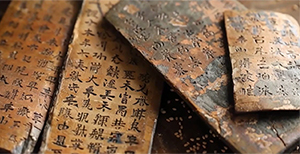
The earliest documented medicinal use of iodine appears in ancient Chinese medical writings dating to approximately 3600 BC. These texts record that the ingestion of seaweed and burnt sea sponge produced a measurable decrease in goiter size. Although iodine had not yet been identified as a chemical element, these natural sources are now known to be rich in iodine, and this treatment was effectively addressing iodine deficiency. This represents the first known written observation of iodine’s therapeutic effect in human medicine. -
~2838–2700 BC — Emperor Shen-Nung of China
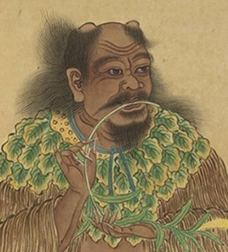
The Chinese Emperor Shen-Nung, commonly revered as the ancestor of herbal medicine in China, is credited with prescribing seaweed as an effective remedy for goiter. His observations and prescriptions were among the earliest to codify iodine-based treatment, and the relationship between goiter and seaweed is traced to his era, around 2700–2838 BC. While initially transmitted orally, these observations were later formally documented in the Sheng Nong’s Herbal Classic around 300 BC.~300 BC — Shen-Nung’s Herbal Classic
The oral tradition surrounding seaweed and goiter treatment was formally committed to writing in the Shen Nung’s Herbal Classic (also known as the Shennong Bencao Jing) around 300 BC. This text, compiled during the Qin–Han dynasties, recommended seaweed for the treatment of goiter disease, described as “Ing-Liou.” Seaweed was noted to “soften” thyroid nodules and relieve associated swelling. This constitutes one of the earliest written pharmacological records in history.
-
~1400 BC — Ayurvedic Medicine (India)

Ayurvedic medical texts from approximately 1400 BC, native to India, also referenced goiter — described as “galaganda” — and included treatments drawing on iodine-rich marine sources, further demonstrating the broad and independent recognition of iodine’s therapeutic role across ancient civilizations. -
Classical Antiquity 700 BC - 400 AD
Hippocrates, Galen, and Others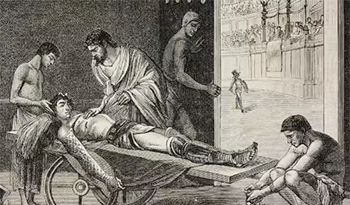
The use of iodine-rich seaweed and burnt sponge for goiter treatment spread westward and was documented by prominent Greek and Roman physicians, including Hippocrates and Galen, as well as later medieval writers such as Roger and Arnold of Villanova.
These treatments remained in consistent use across cultures for millennia, affirming their effectiveness even without an understanding of the underlying mechanism. -
1811
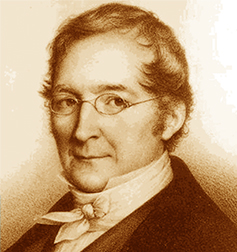
French chemist Bernard Courtois first isolated iodine as an element in 1811 while processing seaweed ash during gunpowder production. He observed a distinctive violet vapor, and the element was subsequently named “iodine” by Gay-Lussac, from the Greek ioeides, meaning violet-colored.
This discovery provided the scientific explanation for why seaweed-based treatments had been effective for thousands of years. -
1819
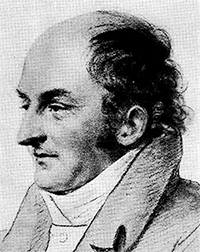
Swiss physician J.F. Coindet, aware of the traditional use of seaweed in treating goiter, hypothesized that iodine was its active ingredient.
In 1819, he successfully tested a tincture of iodine on 150 patients, achieving significant reduction in goiter size within one week. This marks the first time iodine was consciously and deliberately administered as iodine in a clinical setting.
Key Takeaway for I2Pure
The documented medicinal history of iodine spans nearly 5,000 years, from ancient Chinese medical texts to modern clinical use. Across this entire recorded history:
- No pathogen — bacterial, viral, or fungal — has ever been documented developing resistance to molecular iodine.
- Iodine has been used effectively across every major ancient civilization independently.
- Its mechanism of action — oxidative destruction of microbial cell structures — is fundamentally resistant to the genetic adaptation pathways that drive antibiotic resistance.
- This unbroken track record of pharmacovigilance is unique among antimicrobial agents.
Sources & References
Discovery and Early Uses of Iodine — ResearchGate / Journal of Chemical Education (2000), New York University School of Medicine.
Goiter Disease in Traditional Chinese Medicine — Journal of the Chinese Medical Association (PMC, 2021).
The Story of Iodine Deficiency — Basil S. Hetzel, Oxford University Press (1989); reviewed in NEJM (1990).
Gunpowder and Seaweed: The Story of Iodine — National Museum of Civil War Medicine.
The History of Iodine in Medicine Part I — Hakala Research.
Goiter History — News-Medical.net.
The Historical Journey of Iodine: From Ancient China to Modern Supplements — UMZU (2024).